
The problem it solves
Over years, central heating systems build up sludge — a mix of rust and debris from inside the pipework and radiators. It settles at the bottom of radiators (which is why some feel cold at the bottom even when bled properly) and can restrict flow through the boiler's heat exchanger. That restricted flow is exactly what caused the fault in our Stourbridge case study — sludge blocking the plate heat exchanger and forcing the boiler to overheat.
What actually happens
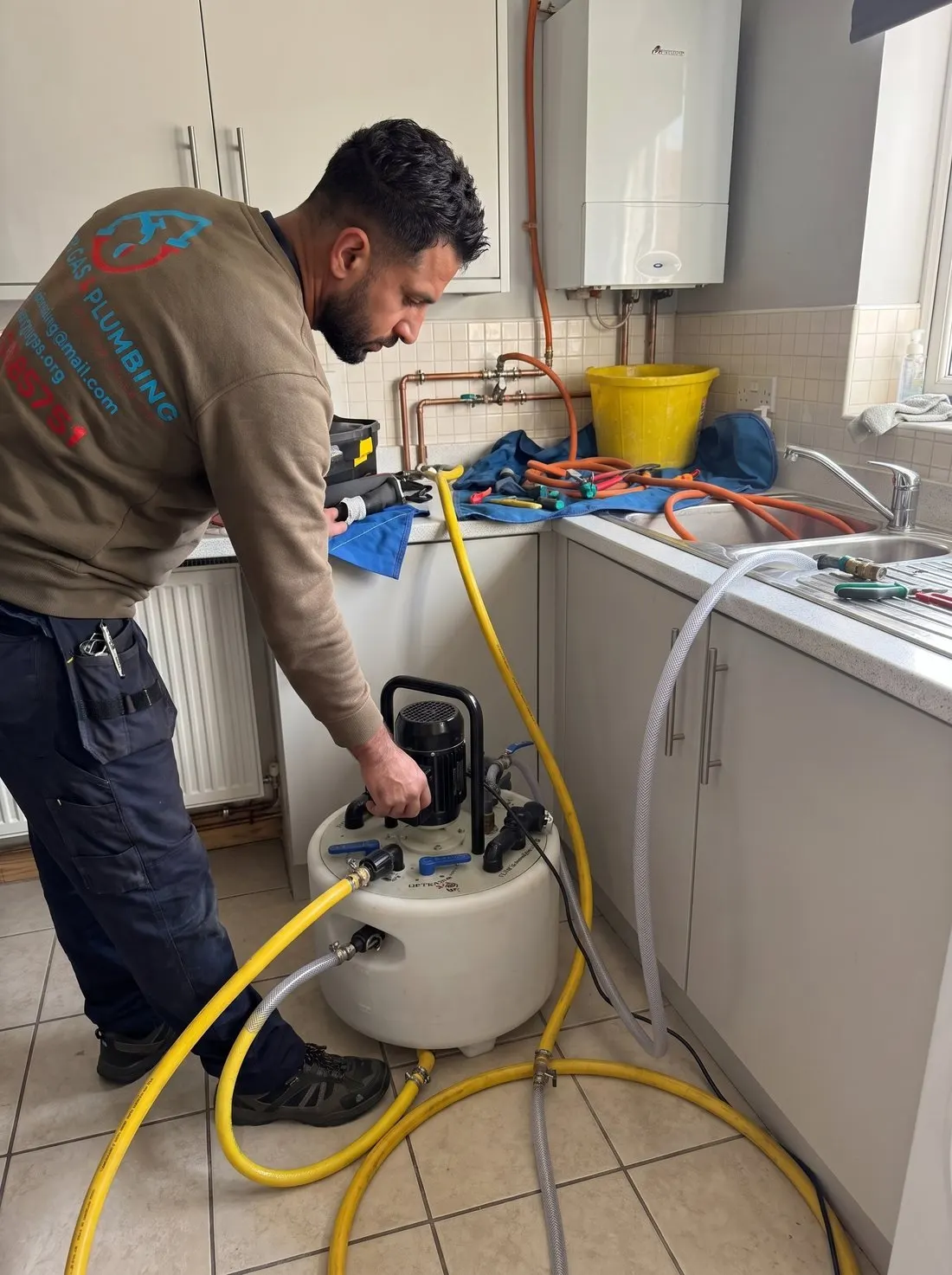
A power flush pumps a cleaning chemical mixed with water through your entire heating system at high flow (not high pressure, despite the name) to break down and clear that built-up sludge and scale, flushing it out through a hose rather than leaving it recirculating through your boiler and radiators.
Signs it's worth considering
- Radiators that are cold at the bottom even after bleeding
- Kettling or banging noises — see our full guide on that noise
- Some radiators heating up much slower than others
- Discoloured water when you last bled a radiator
Pricing
Up to 10 radiators: £550. Systems with more than 10 are quoted on site. A magnetic filter (£320) is often fitted alongside a flush — it catches new debris going forward, so the flush doesn't just get undone again over the following months. There's more detail on the whole process on Synergy Gas & Plumbing's power flushing page.
Not sure if this is what your system needs? Our problem finder is a good starting point, or call 07413 385767 to describe what's happening.